History and culture
Wat Phnom History: Lady Penh, the Hill and the City Name
Wat Phnom is a living Buddhist place of worship as well as a landmark associated with the origin of Phnom Penh’s name. The founding story is a tradition, not a documentary record of every event.
Open Wat Phnom on Google Maps ↗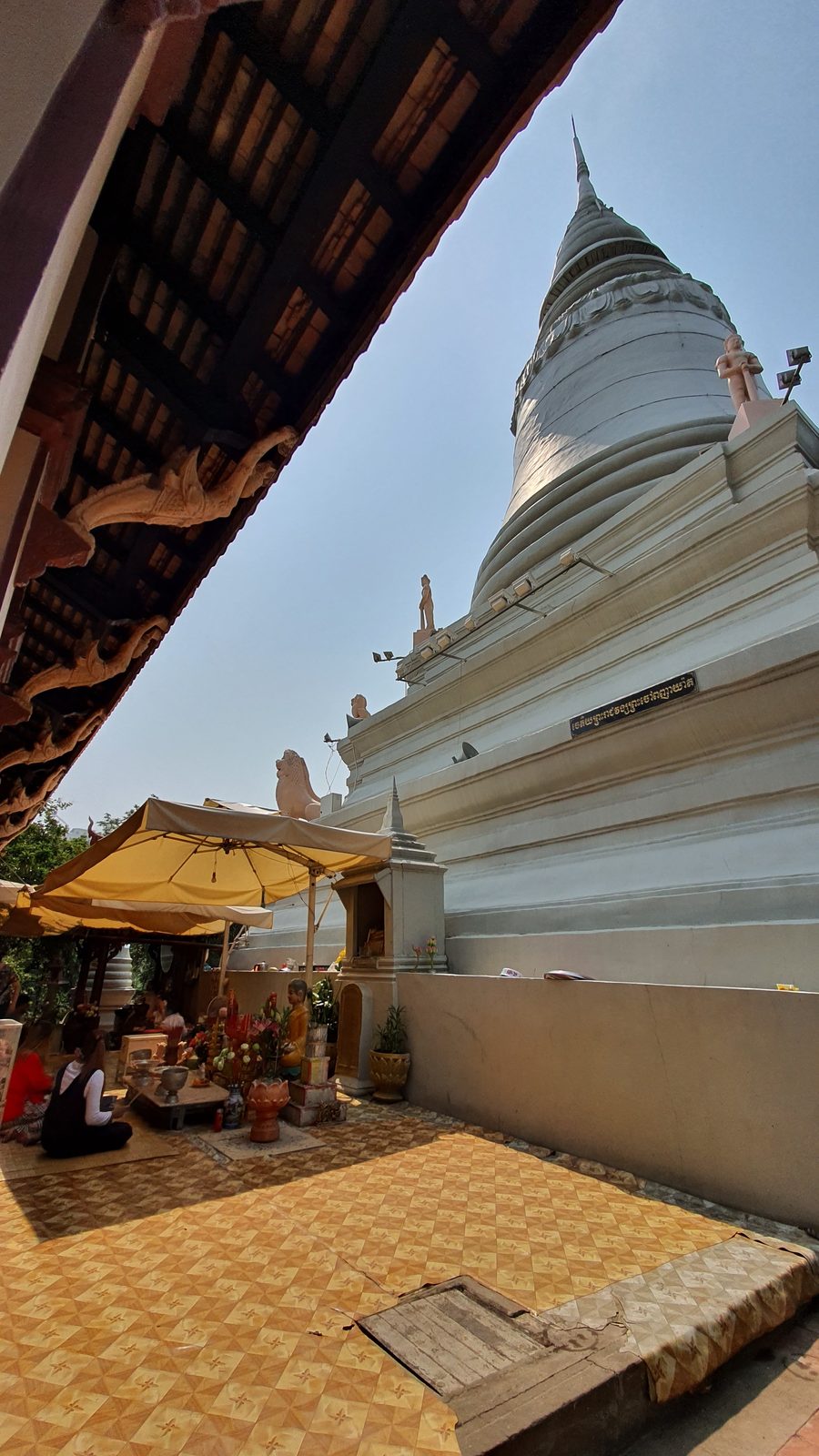
About the temple and its care
Wat Phnom is an active Buddhist temple and a public cultural landmark in Phnom Penh. Temple worship areas and the surrounding public landscape have different functions. Visitors should follow on-site guidance and respect worshippers; this independent guide does not represent its managing authorities.
Essential visitor information
- Wat Phnom Daun Penh
- Wat Phnom Road, Daun Penh, Phnom Penh 12000, Cambodia
- Plus Code
- HWGF+F6
- Suggested visit: 45–60 minutes
- Published guide hours: 07:00–19:00; verify on arrival
- Hours and admission pocket guide
- Admission may vary by visitor category; verify the current price at the entrance
Lady Penh and the floating tree
According to the widely told legend, a woman named Penh found sacred Buddha images in a tree carried by the river. She and local residents raised a mound and made a shrine to protect them. Phnom means hill; Phnom Penh can therefore be understood as “Penh’s hill”.
Accounts differ on whether the original shrine dates to 1372 or 1373. Treat these dates as traditional approximations rather than precise architectural dating.
What you see today
The tree-shaded hill rises about 27 metres above the surrounding city. The principal sanctuary, stairways, guardian figures and stupas reflect successive rebuilding and additions, not a single untouched medieval structure.
Look closely at the roof silhouette, carved details and the contrast between active devotional spaces and the civic park below. The sanctuary has been rebuilt more than once; a major twentieth-century reconstruction is commonly dated to 1926.
Worship and cultural context
Visitors may see incense, offerings and people praying. Give worshippers room, keep voices low and check before photographing anyone. Some interior areas or ceremonies may restrict photography.
The hill is close to the old riverfront district. Pairing the visit with a walk toward the river helps explain how a small sacred hill became an enduring symbol of the capital.
A 40–60 minute history walk
- Begin at the base of the hill and look at the stairway and guardian figures.
- Walk uphill at an unhurried pace, keeping clear of devotional activity.
- Observe the sanctuary exterior, roofline and stupas before entering permitted areas.
- Pause near the Lady Penh-related shrine and read local signage for context.
- Descend and continue to the historic riverside if time permits.
Before visiting
- There is no need to buy a separate “history tour” ticket for this self-guided walk. Confirm current admission and hours at the entrance.
- Wear clothing suitable for a temple and remove shoes where requested.
- For a concise price and opening-time checklist, consult the pocket guide.
FAQ
Why is Phnom Penh named after Lady Penh?
The traditional account links the city name to the hill created for a shrine after Lady Penh discovered sacred images.
Is the current temple the original 14th-century building?
No. The sanctuary has undergone several rebuildings and repairs over the centuries.
Continue your visit
How to Get to Wat Phnom: Riverside, City Centre and KTI Airport →
Continue your visit
Visitor reviews
For current ratings and the original visitor comments, use the dedicated Google Maps listing. Review counts change and are not independently reproduced here.
Google Maps ↗